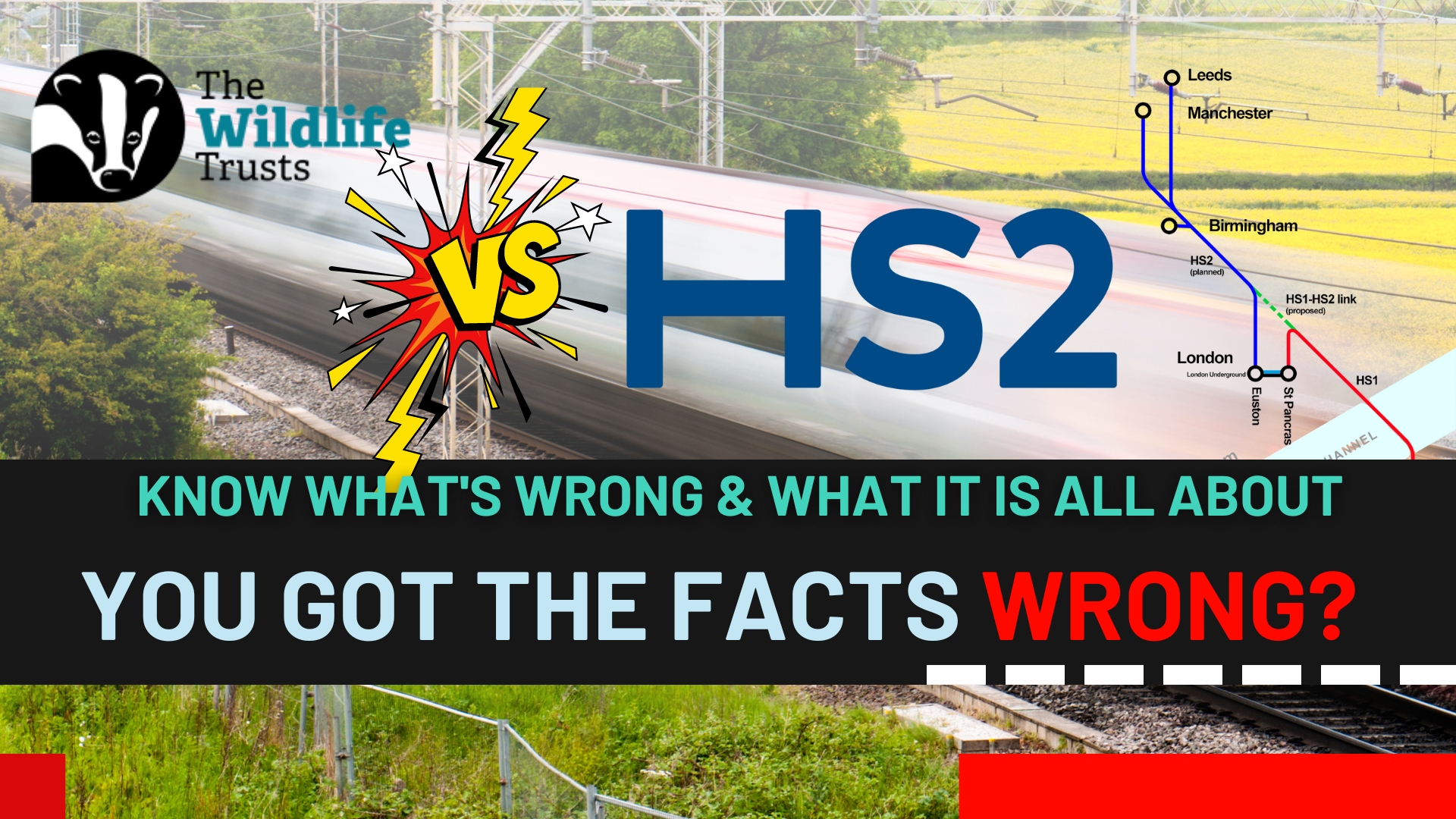
A new report has shown that the HS2 project, which is building a high-speed rail line in the UK, has made big mistakes in how it is handling nature and wildlife along the construction route.
Hello Global Media, along with research firm IR9 Ltd assessed that the report says that the company in charge, HS2 Ltd, has undervalued the natural habitats and wildlife being destroyed, and overvalued its plans to fix the damage. For example, in one part of the project, the report says that at least 7.9 times more nature will be lost than the company has estimated. The report also says that the company’s plans to make up for the loss of nature are flawed and untested. The report found that HS2 Ltd has made mistakes in how it is counting the value of wildlife habitats, and there are many trees, watercourses and other things that have been missed. The report says that the company’s promises to not let nature lose out are not being kept, and there will be much less nature after the construction is done.
In simple terms, the comparison of how much nature will be lost after the HS2 construction is as follows:
For Phase 1, the new report says that there will be a minimum of 17.36% loss of nature, while the company in charge, HS2 Ltd, says there will only be a 2.60% loss. For Phase 2a, the new report says that there will be a minimum of 42.80% loss of nature, while HS2 Ltd says there will only be a 17.01% loss.
HS2, or High Speed 2, is a proposed high-speed railway project in the United Kingdom, designed to connect London with the cities of Birmingham, Manchester and Leeds. The project has faced numerous controversies since its inception and has been a topic of heated debate in Parliament and among the general public.
The HS2 project was first proposed in 2009 as a way to address the increasing demand for rail travel in the UK and to reduce congestion on existing railway lines. The initial plans were for a high-speed railway running from London to the West Midlands, with plans for further extensions to northern cities. The project was expected to cost around £32 billion and was scheduled to be completed by 2026.
However, the project has faced numerous setbacks and controversies, including allegations of overspending, environmental damage, and disruption to communities. Critics of the project have argued that the cost has spiralled out of control and that the benefits of the project have been overstated. The latest estimate of the cost of the project is around £106 billion, making it one of the most expensive infrastructure projects in the UK’s history.
One of the most controversial aspects of the HS2 project has been its impact on the environment. The project has faced opposition from environmental groups, who have raised concerns about the destruction of ancient woodlands, habitats, and the displacement of wildlife. The project has also faced criticism for its impact on communities, with many residents of the affected areas claiming that their homes and businesses will be destroyed or disrupted.
For Phase 1 (2021 scheme), the Wildlife Trusts’s assessment indicates a minimum net loss of 4,367 NNL units (17.36% loss of the pre-construction biodiversity value in NNL Units).
This compares to a net loss of 555 NNL units (2.60% loss of the pre-construction biodiversity value in NNL units), as calculated by HS2 Ltd.
For Phase 2a, the Wildlife Trusts assessment indicates a minimum net loss of 4,891 NNL units (42.80% loss of the pre-construction biodiversity value in NNL Units). This compares to a net loss of 1,342 NNL units (17.01% loss of the pre-construction biodiversity value in NNL units), as calculated by HS2 Ltd.
In Parliament, the HS2 project has been the subject of intense debate, with many politicians speaking out against the project. In 2019, the then-Shadow Chancellor, John McDonnell, described the project as a “white elephant”, while the then-Secretary of State for Transport, Chris Grayling, defended the project, saying that it was “vital for the future of the country”.
The funding for the HS2 project has been a contentious issue, with some arguing that the project is a waste of public funds. The project is being funded by a combination of government grants, private investment, and a levy on train tickets. Critics of the project have argued that the cost is too high and that the money would be better spent on other projects, such as upgrading existing rail infrastructure or investing in renewable energy.
Top famous quotes on The HS2:
- “The cost of HS2 has spiralled out of control.” – Boris Johnson, UK Prime Minister, in 2019 during a press conference.
- “HS2 is a catastrophic waste of taxpayers’ money.” – Margaret Hodge, former Chair of the Public Accounts Committee, in 2020 during a parliamentary debate.
- “We need to think hard about whether HS2 is the best way to spend billions of pounds on rail investment.” – Ed Miliband, former UK Labour leader, in 2013 in an article for The Guardian newspaper.
- “I cannot support HS2, it’s a £100 billion white elephant.” – John Redwood, Conservative MP, in 2013 during a parliamentary debate.
- “The case for HS2 is weak and getting weaker.” – Vince Cable, former UK Liberal Democrat leader, in 2013 during a speech at the Royal Society of Arts.
- “We need a full review of HS2’s costs, benefits and the impact on the environment.” – Caroline Lucas, Green Party MP, in 2016 during a parliamentary debate.
- “It’s time to pull the plug on this vanity project.” – David Davis, Conservative MP, in 2016 during a speech in the House of Commons.
These quotes reflect the diverse views and controversies surrounding the HS2 project, including concerns about its high cost and impact on the environment.
In conclusion, the HS2 project has been surrounded by controversy since its inception. Despite support from some quarters, the project has faced opposition from environmental groups, communities, and politicians, and has been criticized for its cost, environmental impact, and disruption to communities. The future of the HS2 project remains uncertain, with many questions about its funding and viability still to be answered.








 London Diary5 years ago

 Bollywood5 years ago

 All4 years ago

 All4 years ago

 All4 years ago

 All4 years ago

 All5 years ago

 Asian Community5 years ago